Roofing repair is often needed because the region’s weather can be hard on roofs. Roof leaks can start small and grow into serious problems if they are not found and fixed quickly.
Roofing repair should begin as soon as you notice a leak or any sign of moisture inside your home.
Leaks may start above your head, but the signs frequently show up in your attic, walls, or ceilings long before the source is obvious.
This guide explains the most common causes of roof leaks in the Midwest and what you should watch for as a homeowner.
Why Roof Leaks Happen More Often in the Midwest
Midwest weather includes:
- Heavy snow and ice
- Rapid temperature changes
- Strong thunderstorms
- High winds
These conditions put pressure on roofing materials and can lead to leaks over time.
Knowing the causes helps you understand what to look for and when to call for roofing repair.
1. Damaged or Missing Shingles
Shingles protect the roof surface and shed water away from the structure.
Shingles can become:
- Cracked or curled
- Loose or missing after storms
- Worn down by sun and age
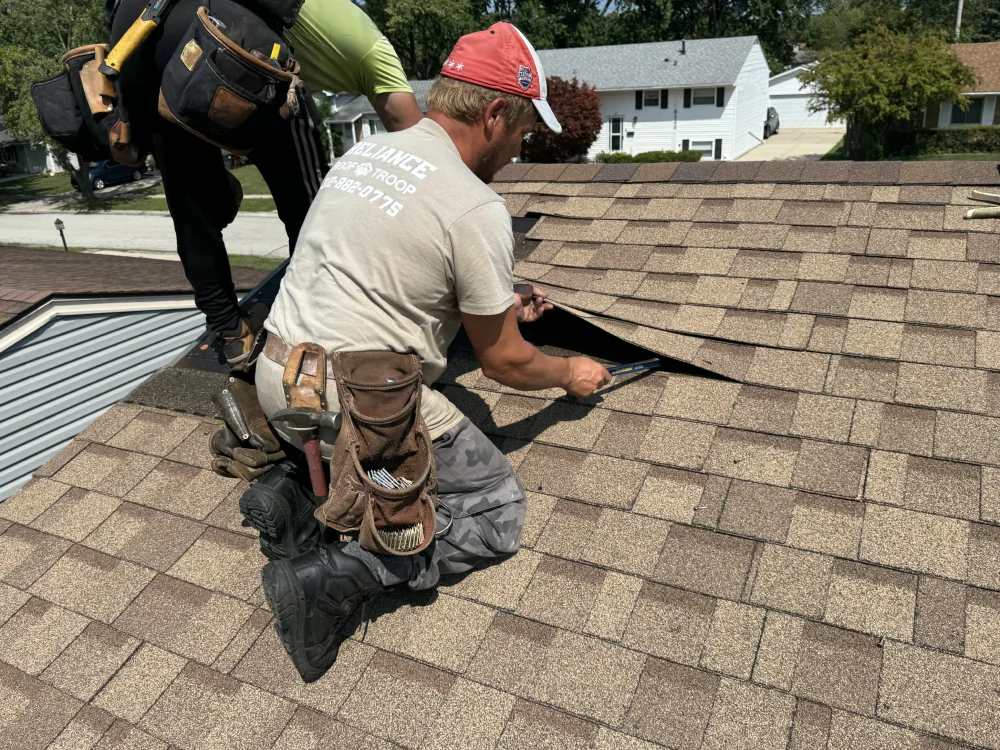
When shingles are damaged, water can enter underneath and reach the roof deck. Over time, this can cause soft spots and leaks inside your home.
If you see shingles that look irregular or worn, it’s often one of the first steps toward needing roofing repair.
2. Worn or Broken Flashing Around Roof Penetrations
Flashing is the thin metal material that seals the roof where it meets:
- Chimneys
- Vent pipes
- Skylights
- Roof edges
Flashing is critical because these joints are weak spots where water can enter.
Flashing problems include:
- Rusted or corroded metal
- Flashing pulled away from roofing surface
- Cracks in sealant around flashing
Water can travel under flashing and leak into your attic or walls before you see any visible damage outside.
3. Ice Dams and Snow Buildup
In cold Midwest winters, snow and ice sometimes build up at the roof edges.
Ice dams form when:
- Heat from inside your home melts snow near the roof peak
- Water runs down and refreezes at colder roof edges
This trapped ice stops water from draining, allowing it to back up under shingles and leak inside.
No matter how solid your roof looks, ice dams can force water under protective layers and cause interior leaks.
Proper attic insulation and ventilation help limit this risk, but roofing repair may still be needed when damage occurs.
4. Clogged or Improper Gutters
Gutters and downspouts move water off your roof and away from your home.
When they are clogged with:
- Leaves
- Twigs
- Debris
Water can back up onto the roof. This standing water can flow under roofing materials and enter the home.
Even if your roof materials are in good shape, overflow from clogged gutters can cause leaks along the edges.
Regular cleaning and maintenance of gutter systems can reduce this cause of roof leaks.
5. Poor Roof Ventilation
Ventilation allows air to circulate in your attic.
When a roof does not have proper ventilation:
- Heat and moisture build up inside the attic
- Shingles age faster
- Wood decking absorbs moisture
Moisture buildup can lead to condensation, which often looks like leakage but is actually moisture from inside the house.
Proper ventilation helps reduce heat and moisture buildup that can lead to water problems and the need for roofing repair.
6. Improper Roof Installation or Repairs
Sometimes, roof leaks happen because something was done incorrectly.
Common installation issues include:
- Nails placed incorrectly
- Flashing not sealed well
- Roofing layers not aligned
- Shingles not fully secured
Even high-quality materials will fail early if they are not installed correctly.
This is one of the reasons thorough inspections and professional roofing work matter before and after any roofing repair.
7. Damaged Seals Around Roof Vents
Roof vents allow air to flow in and out of your attic.
Over time, the seals around these vents can:
- Crack from age or temperature changes
- Shrink or pull away from vent bases
- Deteriorate from sun exposure
When the seal fails, rainwater and melting snow can get underneath and leak into the roof structure.
Regular inspections help locate these issues early.
8. Aging Roofing Materials
All roofing materials wear out eventually.
Roof life depends on:
- Material quality
- Weather exposure
- Maintenance history
Older roofs are more likely to develop leaks because:
- Shingles become brittle
- Protective layers thin
- Roof decking weakens
Once a roof reaches the end of its expected lifespan, leaks become more common, and repairs may not be enough.
9. Roof Valleys Wearing Down
Roof valleys are where two roof planes meet, and water naturally flows to these areas.
Valleys can wear down because:
- Water flows faster and erodes materials
- Debris collects and traps moisture
- Sealants break down over time
Since valleys handle more water flow, they are frequent sources of leaks, especially in heavy rain or snowmelt.
10. Tree Damage and Debris
Trees close to your home can cause roof problems in several ways:
- Falling branches can dent or crack roofing materials
- Leaves and pine needles can clog gutters
- Impact from debris during windstorms
Damage from trees often goes unnoticed until a leak shows up inside.
Trim branches away from your roof and watch for damage after storms.
11. Chimney Leaks
Chimneys are common leak points for these reasons:
- Flashing around the chimney deteriorates
- Chimney cap or crown cracks
- Mortar joints erode over time
Water can find tiny paths through damaged parts and enter your attic or walls.
Checking chimney flashings and seals regularly helps prevent this type of leak.
12. Roof Deck or Structural Problems
Leaks are sometimes traced back to the structural layers beneath the shingles.
Problems can include:
- Rotting wood from long-term moisture exposure
- Cracked or soft roof decking
- Gaps where boards meet
When the roof deck is weak, even small amounts of water can cause significant damage that looks like a roof leak.
This typically requires roofing repair and replacement of damaged materials.
How to Spot Early Signs of Roof Leaks
Roof leaks do not always show up right away.
Watch for these early signs:
- Water stains on ceilings or walls
- Peeling paint or wallpaper near the roofline
- Dark spots or streaks in the attic
- Musty or damp odors
- Drips appearing after rain or snow melt
Seeing these signs early helps roofing repair professionals find leaks before they become major issues.
What to Do When You Suspect a Leak
If you notice signs of a roof leak:
- Take photos of stains or damaged areas
- Check your attic or crawl space for moisture
- Avoid DIY sealing until a professional inspects the roof
- Schedule a roofing repair evaluation promptly
Delaying action frequently means more water damage and higher repair costs.
How Midwest Weather Makes Leaks Worse
The Midwest sees a range of conditions:
- Snow and ice
- Heavy thunderstorms
- High winds
- Freeze-thaw cycles
These bring moisture into contact with roofing materials repeatedly.
Moisture expands and contracts with temperature changes, which can:
- Break down seals and flashing
- Cause cracks in roofs
- Weaken shingles and underlayment
This makes roofing repair in the Midwest more common than in milder climates.
Preventing Roof Leaks Before They Start
Regular maintenance helps limit roof leaks.
Helpful actions include:
- Inspecting your roof annually
- Cleaning gutters and downspouts
- Trimming trees near the roof
- Checking attic ventilation
- Watching for early interior signs of moisture
Preventive steps reduce the chances of unexpected roofing repair.
About the Company and How We Can Help
Reliance Roof Troop provides expert roofing repair services across the Midwest, including Northwest Indiana. Our team helps homeowners identify and fix common causes of roof leaks, from damaged materials to structural issues. We focus on thorough inspections and lasting repairs so your home stays dry and protected.
If you are dealing with a leak and need reliable roofing repair in the Midwest, contact us for a professional assessment and quality service you can trust.