Key Points:
- Modern asphalt shingles are engineered composites with three critical components: a fiberglass mat for strength, asphalt coating for waterproofing, and ceramic-coated granules for UV protection and durability.
- The manufacturing process includes a thermal sealant strip that activates in the sun after installation, bonding shingles together to resist the high winds and severe storms common in our region.
- Understanding shingle composition helps you recognize why quality matters: thicker mats, better asphalt saturation, and superior granule coatings directly impact how long your roof protects your home.
The Real Question Homeowners Are Asking
You are standing in your home, looking up at your roof, and you are wondering: “What am I actually buying when I invest in a new roof?” The uncomfortable truth is that most homeowners do not know what goes into the materials they are paying for. You see “asphalt shingles” on a quote, but you do not really understand what that means or why one shingle costs more than another.
Here is what matters: understanding how asphalt shingles are made reveals why some roofs last 30 years while others fail in 10. When you know what goes into the manufacturing process, you can make an informed decision about which materials will actually protect your home. Northwest Indiana homes face brutal winters, high winds off Lake Michigan, and humid summers. You need roofing materials engineered specifically for these conditions.
This guide explains exactly what asphalt shingles are made of and how they are manufactured. We will break down the components, walk through the manufacturing process, and show you why material quality directly impacts your roof’s lifespan and performance. By the end, you will understand what separates a quality shingle from a mediocre one.
What Asphalt Shingles Are Actually Made Of
Let us start with the uncomfortable truth: most homeowners have no idea what goes into the shingles on their roof. They think “asphalt” is the main ingredient, but that is only part of the story. Asphalt shingles are composite products, meaning they combine multiple materials that work together to create a durable, waterproof barrier.
The foundation of every modern shingle is a fiberglass mat. According to InterNACHI, this mat comprises less than 2 percent of the shingle’s total weight, but it provides the critical strength needed to resist tearing and pulling over fastener heads. Think of it like the skeleton of the shingle. Without it, the asphalt would be too brittle and would crack under stress.
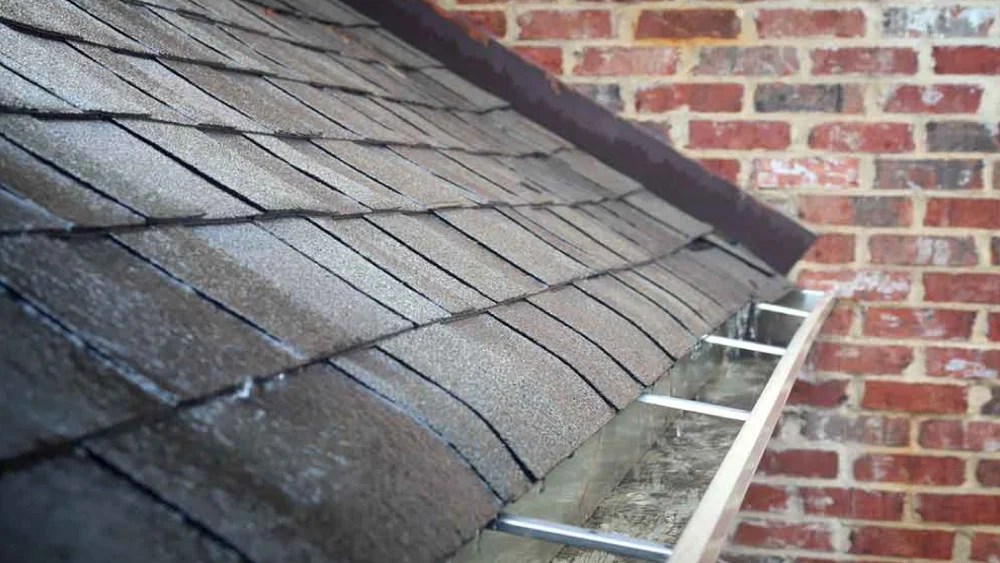
The waterproofing comes from the asphalt coating. Manufacturers mix asphalt with crushed limestone powder to create a durable, weather-resistant layer. This coating is applied to both the top and bottom of the fiberglass mat, completely saturating it. Finally, the top surface is embedded with ceramic-coated mineral granules. These granules serve three purposes: they provide the shingle’s color, protect the asphalt from damaging ultraviolet rays, and add weight and texture for traction and aesthetics.
Why Fiberglass Changed Everything
Older asphalt shingles used cellulose-based mats instead of fiberglass. These organic shingles absorbed moisture, which caused them to deform and deteriorate faster in humid climates. Northwest Indiana’s damp summers made organic shingles a poor choice for our region.
Modern fiberglass shingles are dramatically superior. Because fiberglass does not absorb moisture, the shingles remain stable as they age. They deform less in warm, humid conditions. They are also more resistant to heat damage. This is why virtually every shingle manufacturer in North America now uses fiberglass mats. If you see an older home with original shingles from the 1970s or 1980s, those were likely organic shingles. The fact that they failed tells you something important: material composition matters.
The Manufacturing Process: From Raw Materials to Your Roof
The process of turning raw materials into finished shingles is highly automated and precise. It begins at the mill, where large rolls of fiberglass mat are fed into a coating machine. Here is what happens next.
First, the hot asphalt and limestone mixture is applied to both sides of the moving fiberglass mat. This completely saturates the mat, creating a waterproof barrier. While the asphalt is still hot and sticky, ceramic-coated mineral granules are dropped onto the top surface. Large rollers then press the granules firmly into the asphalt, embedding them permanently.
Next, a thin layer of sand or talc is applied to the back of the sheet. This prevents the shingles from sticking together while they are rolled or stacked. The continuous sheet is then cooled with water sprays before moving to the final stages of production. This cooling step is critical because it sets the asphalt and prevents the granules from shifting.
The Sealant Strip: Engineering for Wind Resistance
One of the most critical steps in the manufacturing process happens right at the end. A specialized strip of thermal sealant is applied to each shingle. This sealant looks like a thin black line running across the shingle, but it is actually an engineered adhesive designed to activate when heated by the sun.
Once your roof is installed and exposed to sunlight, this thermal sealant activates and bonds the overlapping shingles together. This bonding process is what gives modern asphalt shingles their impressive wind resistance. A properly sealed roof can withstand winds of 130 miles per hour or more. Without this factory-applied sealant, even the heaviest shingles would be vulnerable to wind uplift during the severe storms that frequently roll through Northwest Indiana.
This is why installation matters as much as material quality. If a roofer does not allow adequate time for the sealant to cure in the sun before exposing the roof to high winds, the shingles may not bond properly. This is one reason why hiring an experienced design-build firm matters.
Why Material Quality Directly Impacts Your Investment
Not all asphalt shingles are created equal, even though they follow a similar manufacturing process. The quality of the raw materials and the thickness of the fiberglass mat significantly impact the final product’s durability and performance.
Three-tab shingles use a single flat layer of fiberglass and asphalt. They are the least expensive option and typically last 20 to 25 years. Architectural shingles use multiple layers of fiberglass and asphalt laminated together. This creates a thicker, more dimensional shingle that offers better protection and typically lasts 30 to 50 years. Designer shingles are manufactured to premium specifications and can last 50 years or more.
The difference is not just thickness. Higher-quality shingles use better asphalt formulations that resist heat damage and UV degradation. They use thicker granule coatings. They use more durable fiberglass mats. When you invest in higher-quality materials, you are getting a product engineered to withstand more abuse and last longer.
Comparing Shingle Types and Their Performance
| Shingle Type | Fiberglass Mat Thickness | Typical Lifespan | Best For | Key Advantage |
|---|---|---|---|---|
| Three Tab | Standard | 20-25 years | Budget-conscious homeowners with standard weather exposure | Most affordable entry point |
| Architectural | Thicker, multi-layer | 30-50 years | Northwest Indiana homes requiring better wind and hail resistance | Superior durability and dimensional appearance |
| Designer | Premium thickness | 50+ years | High-end homes where maximum curb appeal and longevity matter | Premium aesthetics and longest lifespan |
Real-World Application: What This Means for Your Home
In Hammond, Schererville, Crown Point, and Munster, most homes were built in the 1990s and early 2000s. These neighborhoods have similar housing stock: traditional wood-frame construction with standard roof pitches. Many of these homes have original roofing that is now 25 to 30 years old.
When you replace the roof on one of these homes, you have an opportunity to upgrade. If you choose three-tab shingles, you are making a budget decision. If you choose architectural shingles, you are investing in a roof that will likely outlast your ownership of the home. The difference in cost is typically 20 to 30 percent, but the difference in lifespan is 10 to 25 years.
This is not about being cheap or expensive. It is about understanding what you are buying and making a conscious choice based on your long-term plans for the home.
Understanding Shingle Quality Helps You Make Better Decisions
When you understand how asphalt shingles are made, you understand why material quality matters. The fiberglass mat provides strength. The asphalt provides waterproofing. The granules provide protection and aesthetics. The thermal sealant provides wind resistance. Each component is engineered to work together as a system.
At Reliance Roof Troop, we use our expertise to recommend the right materials for your specific situation. Our design-build approach means we handle everything from assessment to installation with military precision and expert craftsmanship. We do not just install shingles. We engineer a roofing system designed to protect your home for decades. If you are ready to invest in a roof built to last, schedule a consultation to discuss your specific needs and learn which materials will perform best for your home.
FAQ
Why do manufacturers use fiberglass instead of organic mats? Fiberglass does not absorb moisture, which makes it much more stable in humid climates like Northwest Indiana. Older organic shingles absorbed water, which caused them to deform and deteriorate faster. Fiberglass shingles remain stable as they age and are more resistant to heat damage. This is why every major manufacturer now uses fiberglass mats.
What is the black line on asphalt shingles? That is the thermal sealant strip. It is an adhesive designed to activate when heated by the sun after installation. Once activated, it bonds the overlapping shingles together, creating a unified, wind-resistant barrier across your entire roof. This is why new roofs need time to cure in the sun before experiencing high winds.
Do more expensive shingles actually last longer? Yes, but not always for the reason you think. More expensive shingles typically have thicker fiberglass mats, better asphalt formulations, and superior granule coatings. These factors directly impact durability. A three-tab shingle might last 20 to 25 years, while an architectural shingle from the same manufacturer might last 30 to 50 years. The difference is material quality, not marketing.